Practitioner guide
A practitioner's guide to tuning forks
What the terms mean, which set fits which practice, and how to get a clean, sustained tone from every fork. Everything here is in stock and ships in 1 business day.
The basics
Weighted vs unweighted
Weighted
Weighted forks carry a small weight at the end of each tine. They vibrate more slowly, with a tone you feel through the stem as much as you hear it. Practitioners rest the stem on a surface or hold it close. Our single weighted forks are tuned low, at 32, 64 and 128 Hz; the chakra set is weighted too.
- Stronger vibration through the stem
- Lower frequencies, shorter ring
- Used close to or on the body
Unweighted
Unweighted forks have plain tines. They ring longer and sound brighter, so they're the choice for work around the body, for listening, and for interval work with two or more forks. The Solfeggio set and the 128 to 2048 Hz sets are unweighted.
- Longer, clearer ring
- Higher frequencies and multi-fork sets
- Used around the body and for listening
Choosing
Which set for which practice
Chakra set
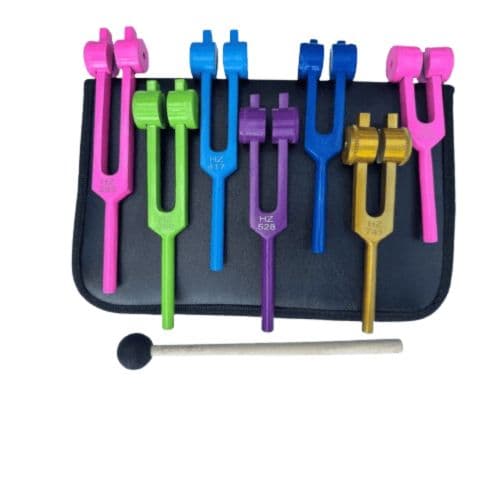
Seven color-coded weighted forks, one for each chakra frequency, with a silicone striker and a storage case. A common first set for practitioners who work on the body.
View set · $59.99Solfeggio set
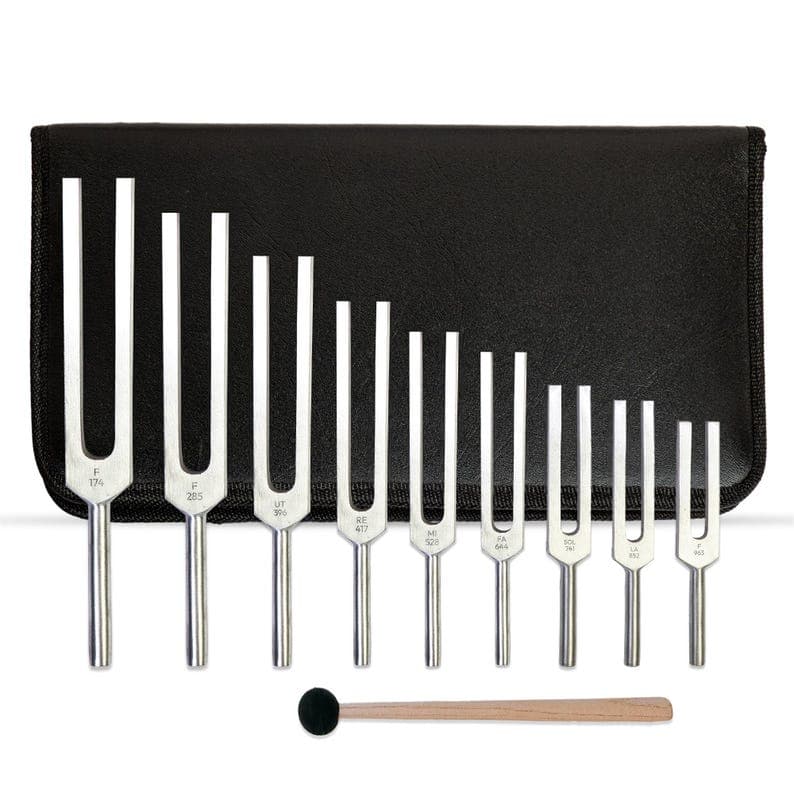
Nine unweighted, color-coded forks from 174 to 963 Hz, the full Solfeggio scale, with a striker and case. For listening sessions, interval work and group settings.
View set · $79.99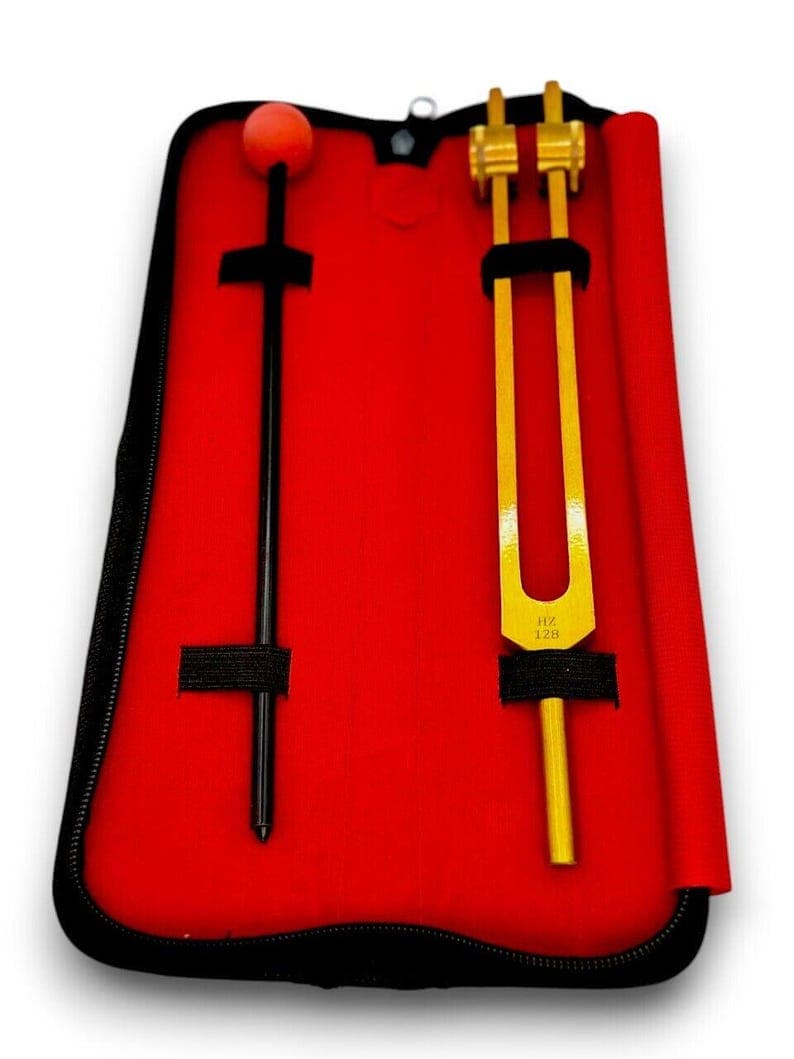
Otto weighted forks
Single weighted forks at 32, 64 or 128 Hz. Strong vibration through the stem, made for work directly on the body. The 128 Hz comes with a mallet and pouch.
View set · $21.99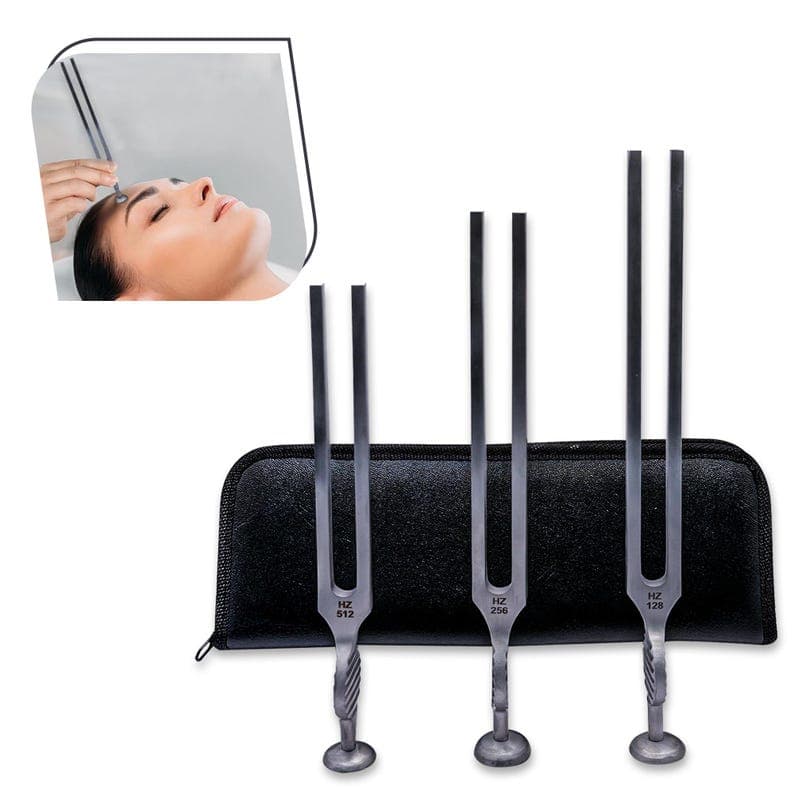
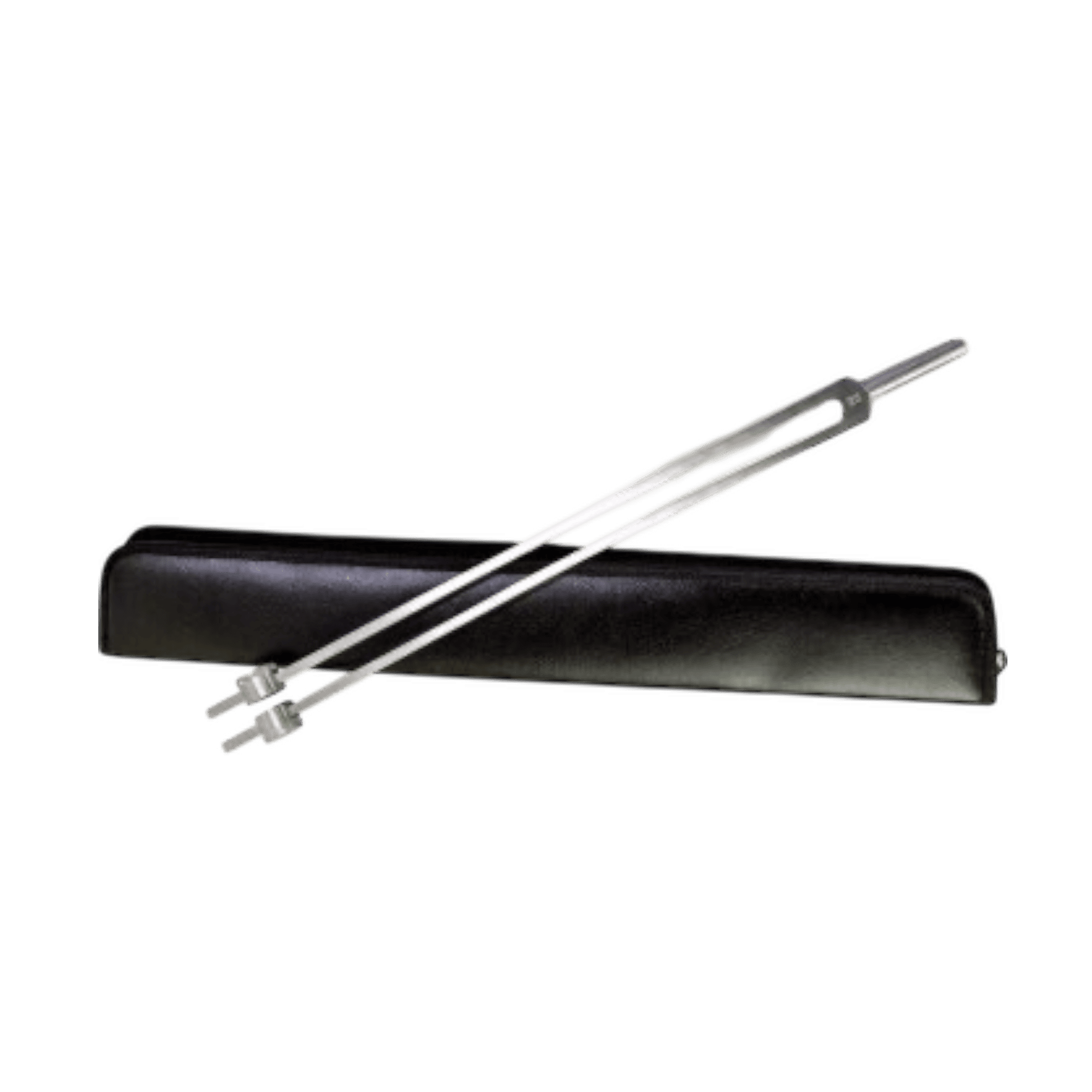
128 / 256 / 512 Hz set
Three steel forks an octave apart, each with a base plate, in a leather case. A compact set for teaching, checking intervals, and anyone who wants a clear reference tone.
View set · $55.99Technique
How to activate and hold a fork
- 1
Hold the fork by the stem, never by the tines. Fingers on the tines stop the vibration.
- 2
Strike one tine on an activator or rubber mallet, about a third of the way down from the tip. One firm tap, not a hit.
- 3
For an unweighted fork, bring it to ear height or move it slowly through the space you're working in.
- 4
For a weighted fork, rest the base of the stem lightly where you're working and let it ring down.
- 5
Let it ring out fully before striking again. Never strike it on a hard surface; dents change the pitch.
Upkeep
Care and storage
- Wipe forks with a dry, soft cloth after each session.
- Keep forks from knocking together. A padded case or the pouch they came in is enough.
- Don't drop a fork or strike it on metal, stone or wood. Dents shift the tuning.
- Store them dry. The forks are corrosion resistant, but long exposure to moisture dulls the finish.
- If a fork stops ringing cleanly, check the tines for nicks first.
Shop
All tuning forks
Every tuning fork we have in stock. Free shipping on all US orders, delivered in 3-7 business days.
Tuning Forks
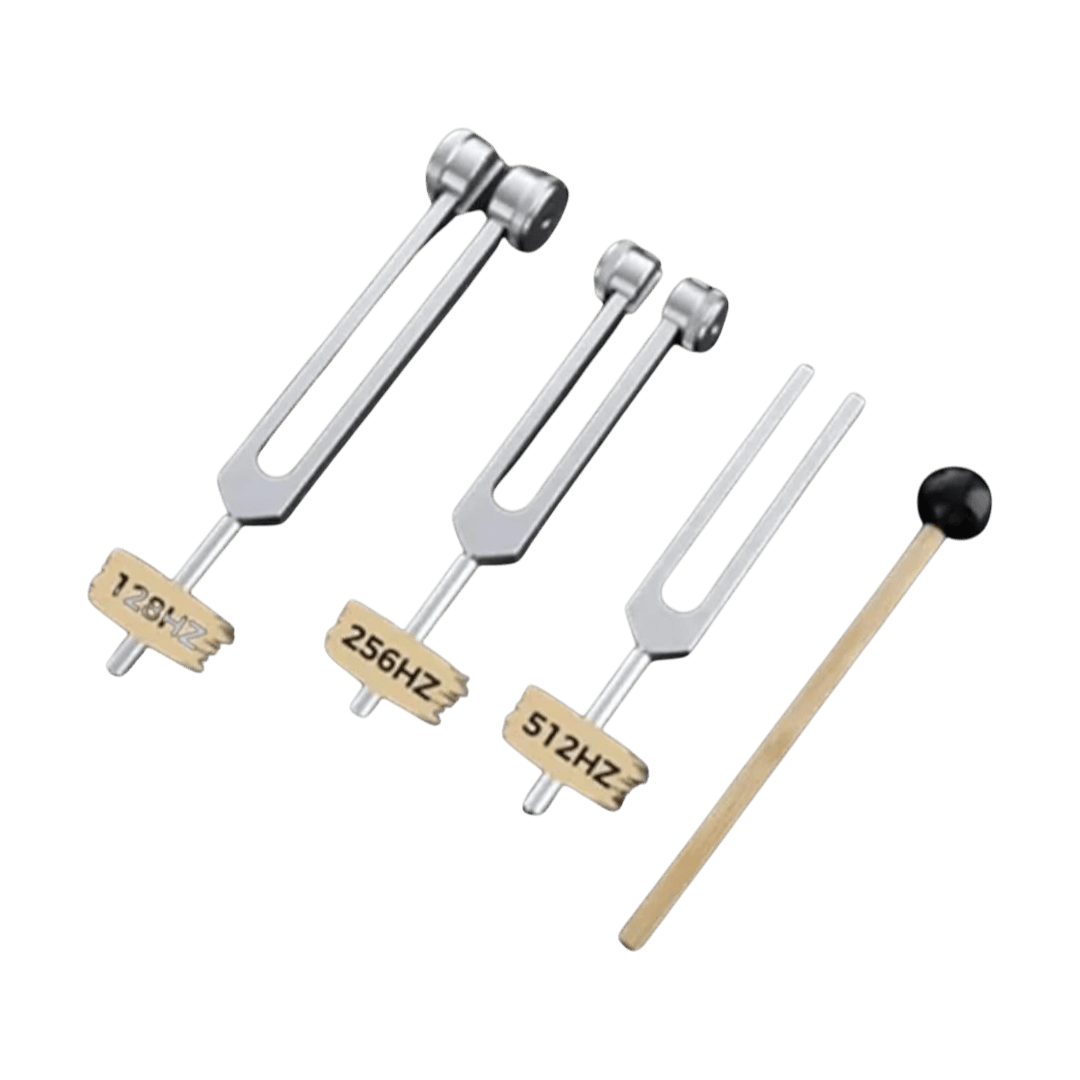
128, 256, 512 Hz Weighted Tuning Fork Set
Tuning Forks
Gardiner Brown Tuning Fork Set 128, 256, 512 Hz
Tuning Forks
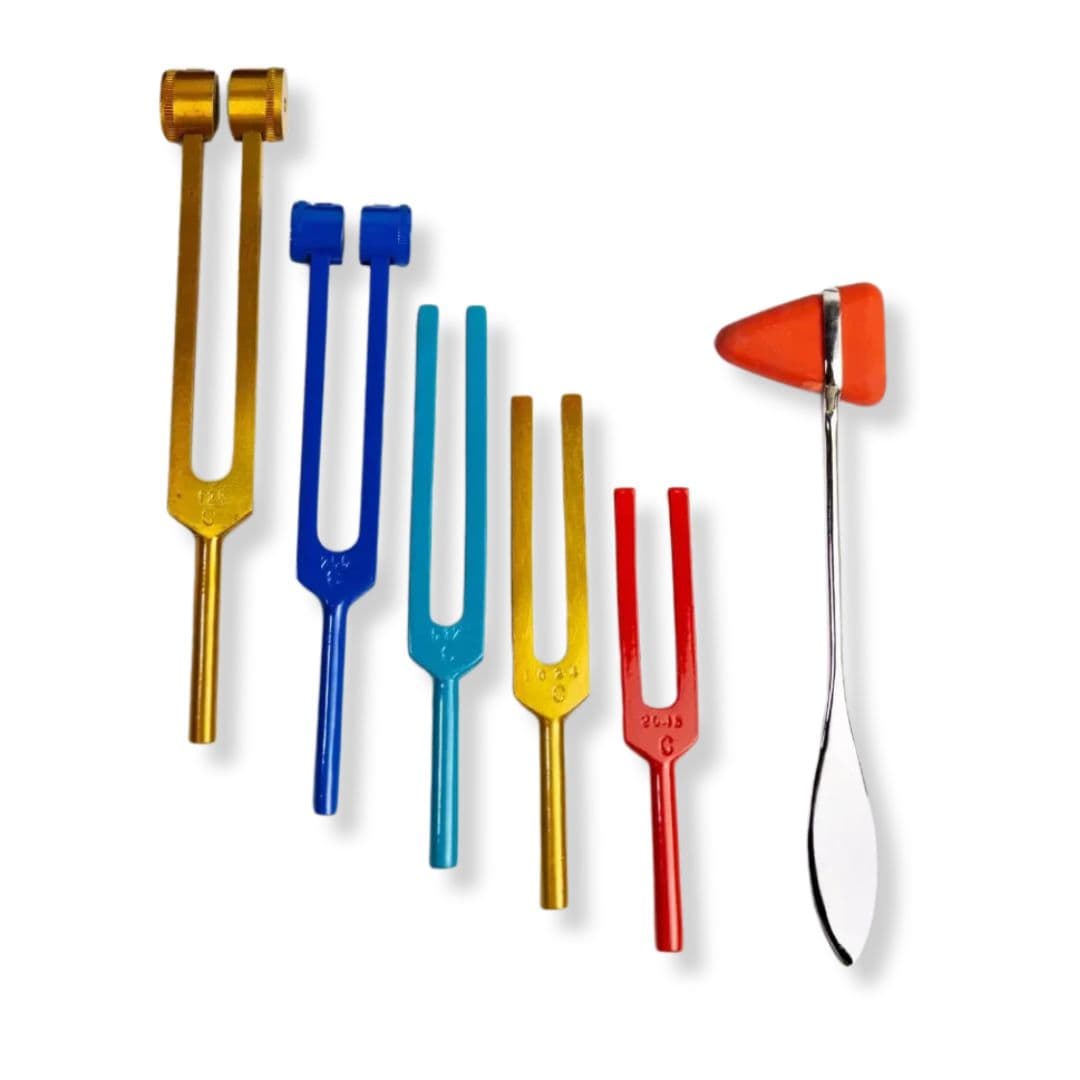
5-Piece Aluminum Chakra Tuning Fork Set
Tuning Forks
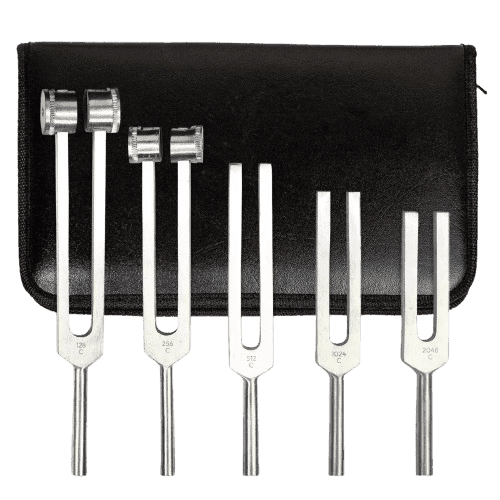
Tuning Fork Set of 5, 128 Hz to 2048 Hz
Tuning Forks
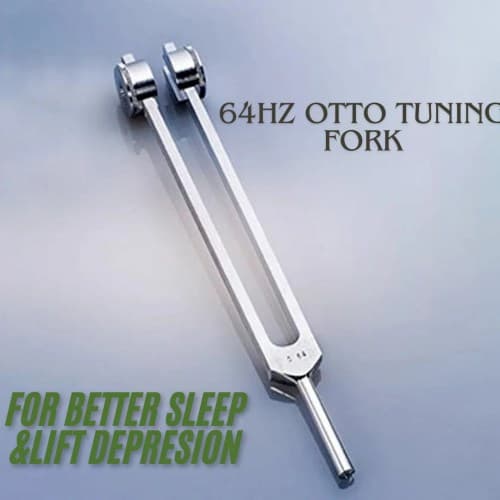
Otto 64 Hz Weighted Tuning Fork
Tuning Forks
42 Hz Weighted Tuning Fork
Tuning Forks
Chakra Tuning Fork Set (7 Weighted Forks)
Tuning Forks
Solfeggio Tuning Fork Set of 9, 174-963 Hz
Tuning Forks
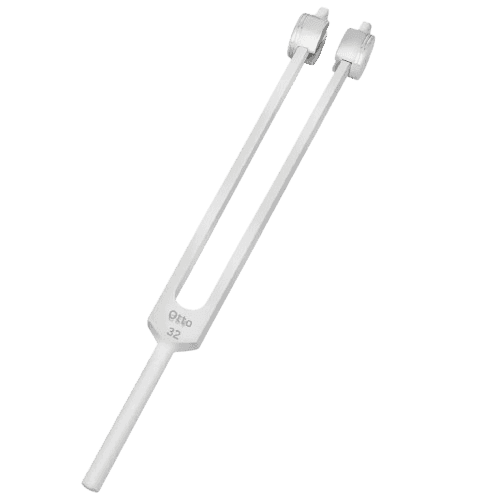
Otto 32 Hz Weighted Tuning Fork
Tuning Forks
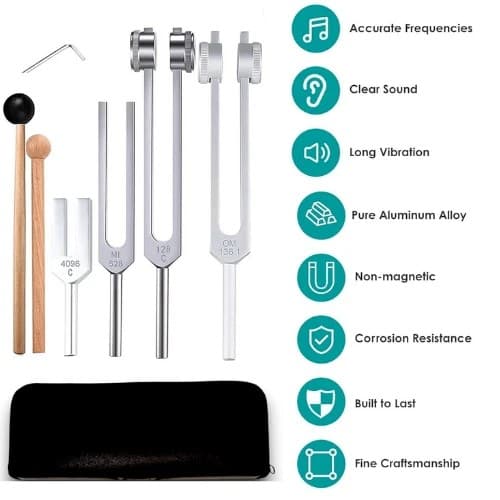
Tuning Fork Set of 4 (128Hz-4096Hz)
Tuning Forks
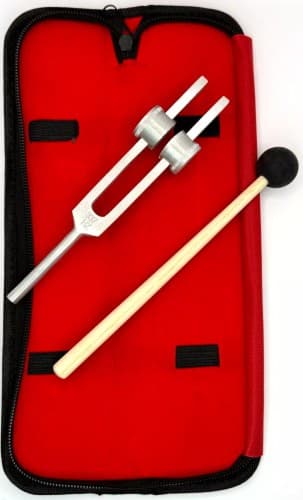
337Hz Weighted Tuning Fork
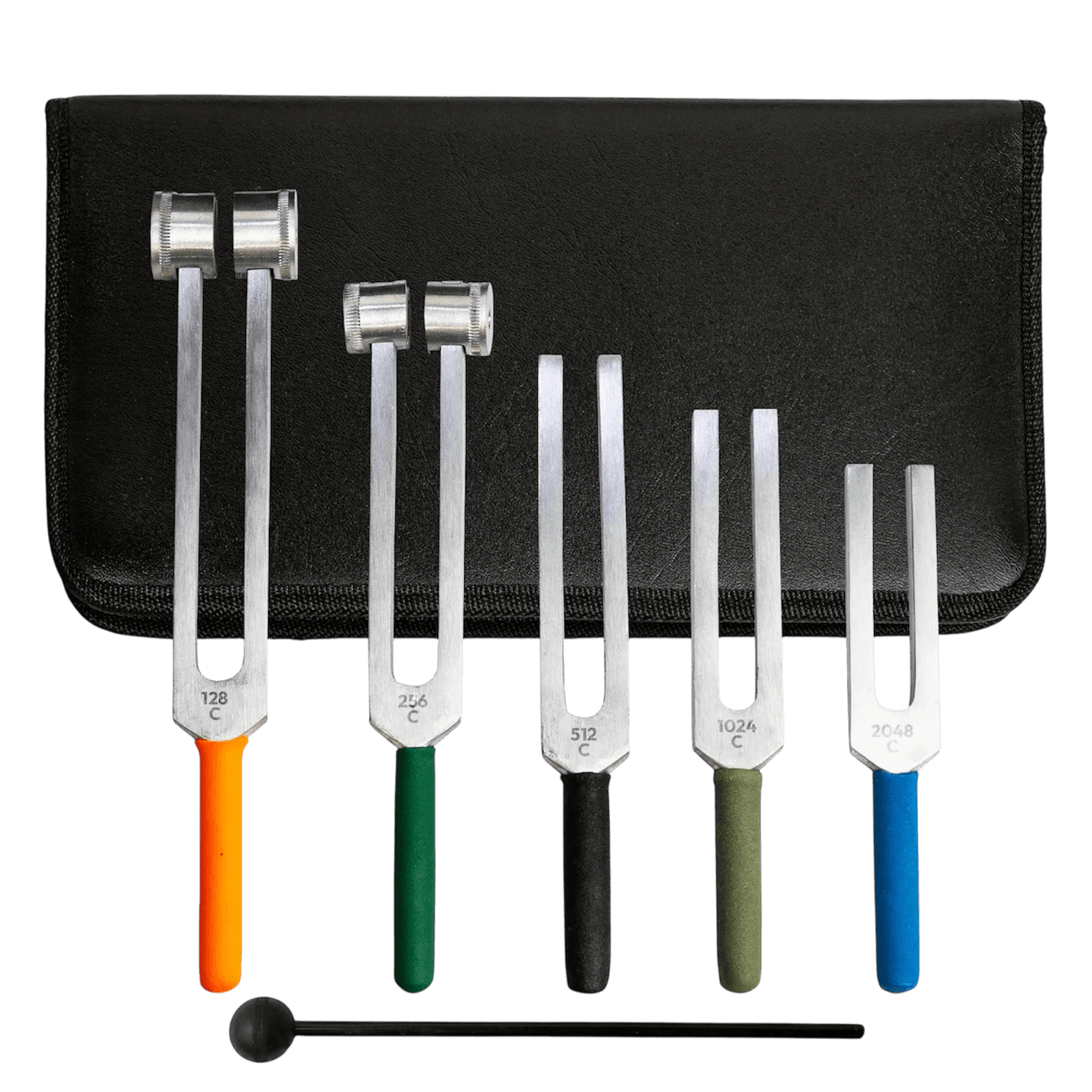
Tuning Forks
Tuning Fork Set of 5 (128Hz-2048Hz)
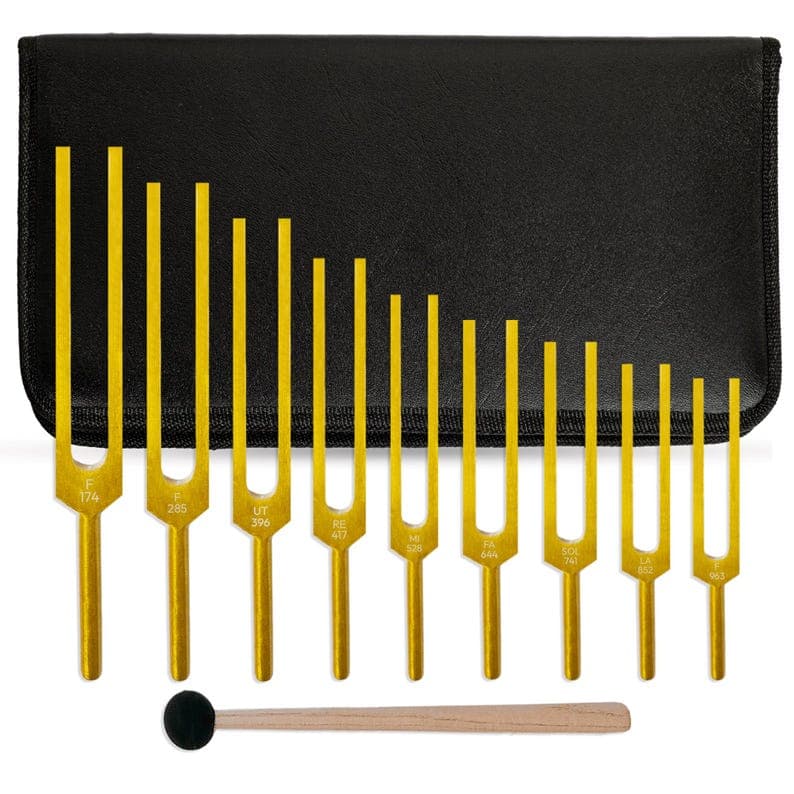
Tuning Forks
Solfeggio Tuning Fork Set of 9 (174Hz-963Hz)
Reading
Guides and articles

64 Hz Tuning Fork Guide: Weighted Design, Striking and Care
How a weighted 64 Hz tuning fork is built, how to strike and hold it, how practitioners use it, and how to care for it.

Tuning Fork Frequencies Guide: Using 128Hz, 256Hz and 512Hz Forks
A practical look at 128Hz, 256Hz and 512Hz tuning forks: how the octaves relate, how to strike and hold each fork, and how to sequence a set.

Tuning Fork Practice for Beginners: Tools, Technique, Set-Up
A practical beginner's guide to tuning forks: how weighted and unweighted forks differ, how to read frequencies, how to strike and hold a fork, and how to set up a quiet space.
Owzars tuning forks are made for sound practice and personal wellness use. They are not medical devices.